
 Coaxial Cable Assembly
 Microwave Test Cable
 Coaxial RF Connector
 Coaxial RF Adapter
 Coaxial RF Termination
 Coaxial RF Test Probe
 Coaxial RF Attenuator
 RF Switches
 Coaxial RF Power Dividers
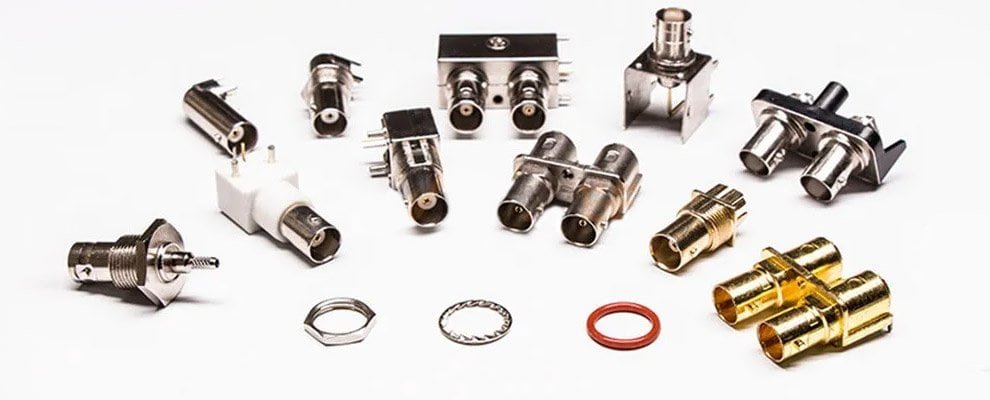
When setting up RF or video systems, a common question arises: What kind of cable uses BNC connectors? The answer is coaxial cables, paired with BNC connector types, forming a reliable solution for high-frequency signal transmission. BNC coaxial cable adapters play a vital role in ensuring compatibility across devices. In this article, we’ll explore the problem of identifying these cables, analyze their specifications and applications, and provide solutions for seamless connectivity—whether through standard setups, adapters, or custom designs.
The Problem: Identifying Cables for BNC Connectors
Selecting the right BNC connectors types and RG6 BNC connector for broadcast and telecom systems is essential for ensuring reliable performance, especially when addressing the needs of industrial and trade integration companies working with enterprise clients. Engineers and procurement teams require detailed guidance on impedance compatibility, termination methods, and environmental ratings when defining the appropriate BNC connector. Common challenges, such as signal degradation over long distances, impedance mismatches, connector assembly errors, and high maintenance costs, can undermine system performance. ZOMWAVE tackles these issues with factory-tested terminations, precise manufacturing tolerances, and clear specifications to reduce return loss, simplify installation, and lower the total cost of ownership. We also assist in identifying the most suitable cable types, like RG-58 and RG-59, to ensure optimal signal integrity, prevent mismatches, and minimize installation errors across a variety of applications. This comprehensive support helps system integrators and operations teams improve efficiency and maintain the highest standards of reliability:
- Compatibility Issues: Mismatched connectors or cables leading to signal loss.
- Application-Specific Needs: Uncertainty about which cable suits a particular frequency or distance.
- Connection Flexibility: Needing to integrate BNC systems with other connector types.
Understanding what cables work with BNC connectors and how to adapt them is essential for efficient operations.
Analysis: Breaking Down BNC Connectors and Cables
What Are BNC Connectors?
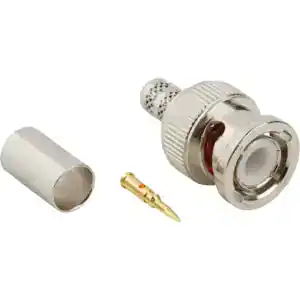
BNC connectors (Bayonet Neill‑Concelman) are RF connectors renowned for their fast, reliable bayonet‑style coupling and consistent 50 Ω impedance. A clear bnc cable definition highlights their evolution from military‑grade origins to widespread use in broadcasting systems, telecommunications networks, professional test and measurement equipment, CCTV installations and aerospace applications. As an integrated industrial and trading partner serving B‑end clients, we provide precision‑manufactured types of BNC cables and assemblies engineered for durability, signal integrity and seamless integration into complex RF infrastructures:
- Radio and television equipment
- Test instruments
- Video surveillance systems
They come in 50-ohm and 75-ohm variants, each tailored to specific signal types—50-ohm for RF and data, 75-ohm for video.
What Are Coaxial Cables?
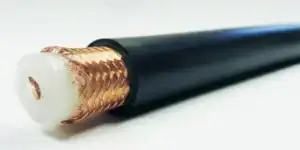
Coaxial cables feature an inner conductor, insulating layer, shielding, and outer jacket. This structure minimizes interference and signal loss, making them ideal for BNC connectors. Their impedance (50 or 75 ohms) must align with the connector and device for optimal performance.
Cables That Use BNC Connectors
Several coaxial cables pair with BNC connectors, each with unique traits:
- RG-58: 50-ohm, perfect for RF applications like radio communication.
- RG-59: 75-ohm, common in CCTV and video setups.
- RG-6: 75-ohm, used for cable TV and satellite systems.
- RG-11: 75-ohm, suited for long-distance video with low loss.
The choice depends on frequency, signal type, and installation environment.
The Role of Adapters
Adapters bridge compatibility gaps. Keywords like rf adapter BNC, coaxial cable adapters, and BNC RCA cable adapter highlight their importance. For instance:
- BNC to RCA: Links BNC systems to consumer devices.
- BNC to SMA: Connects to RF testing equipment.
Solution: Choosing and Implementing the Right Setup
Step 1: Match Impedance and Cable Type
- For RF Applications: Use RG-58 with 50-ohm BNC connectors.
- For Video Systems: Opt for RG-59 or RG-6 with 75-ohm BNC connectors.
Step 2: Leverage BNC Cable Adapters
When standard cables don’t fit:
- Use a BNC cable adapter to extend or convert connections.
- Example: A BNC RCA cable adapter connects a CCTV camera to a TV.
Step 3: Consider Custom Solutions
For unique needs, BNC coaxial cables custom or coaxial cable custom BNC offer:
- Tailored Lengths: Reduce clutter and signal degradation.
- Special Shielding: Enhance performance in noisy environments.
Case Study: Custom BNC in Action
A broadcasting firm needed a 100-meter run for a high-definition video feed. Standard RG-6 wasn’t enough due to interference. A custom RG-11 cable with a 75-ohm BNC connector and extra shielding solved the issue, delivering crisp signals.
Step 4: Installation Best Practices
- Secure the Bayonet: Ensure a firm lock to avoid disconnection.
- Inspect Regularly: Check for wear on cables and BNC cable adapters.
- Quality Matters: Use reliable coaxial cable adapters to maintain signal integrity.
Why BNC Coaxial Cable Adapters Matter for Your Business
BNC cable types are prioritized to align with procurement search intent and guide engineering decisions. When comparing coax vs BNC, critical factors such as signal integrity, mechanical durability, and installation efficiency directly impact system reliability. Whether your project requires a standard coaxial cable adapter or a custom BNC coaxial cable assembly, our integrated manufacturing and trading model ensures precision-built solutions that maximize uptime and streamline inventory management. Commonly used in broadcast, telecommunications, aerospace, security, and industrial automation, these assemblies maintain consistent impedance matching and low signal loss. Understanding the BNC connector meaning helps in selecting the right BNC connector coax solution for robust performance. Key advantages include 5-day shipping, rapid customization, 100% functional testing, and traceable test reports—all designed to shorten qualification cycles, minimize returns, and reduce total cost of ownership. Additionally, our products help mitigate signal interference, simplify maintenance, and enhance system longevity. Partner with us to shorten supply chains, reduce spare part requirements, and receive responsive support for enterprise RF deployments and warranty services:
- Reliability: Consistent signal quality for critical operations.
- Flexibility: Adaptable setups for diverse equipment.
- Cost-Efficiency: Fewer replacements with proper selections.
For clients, this translates to smoother projects and happier customers. Need a specific setup? Contact us for tailored BNC cable adapters or custom solutions.
Conclusion
The BNC cable type is integral to the performance of coaxial solutions, including RG-58, RG-59, and RG-6, which are essential for RF and video systems. When selecting BNC connectors, it is important for engineering and procurement teams to match impedance, shielding, and termination styles to avoid issues like signal loss, ghosting, and long-term reliability concerns. ZOMWAVE delivers precision-engineered BNC cable assemblies, incorporating advanced shielding technologies and increased durability to protect against electromagnetic interference and signal degradation in challenging environments. These high-quality solutions streamline the selection process, reduce installation errors, and ensure reliable performance for high-speed applications. By minimizing downtime and cutting integration costs, ZOMWAVE guarantees optimized signal integrity and smooth deployment across CCTV, broadcast, and telecom infrastructures, ensuring consistent, enterprise-grade performance. ZOMWAVE’s solutions also offer enhanced protection and are ideal for mission-critical applications, where long-term stability and low maintenance are essential.